How Swedish Growers Protect Cut Flowers in Winter
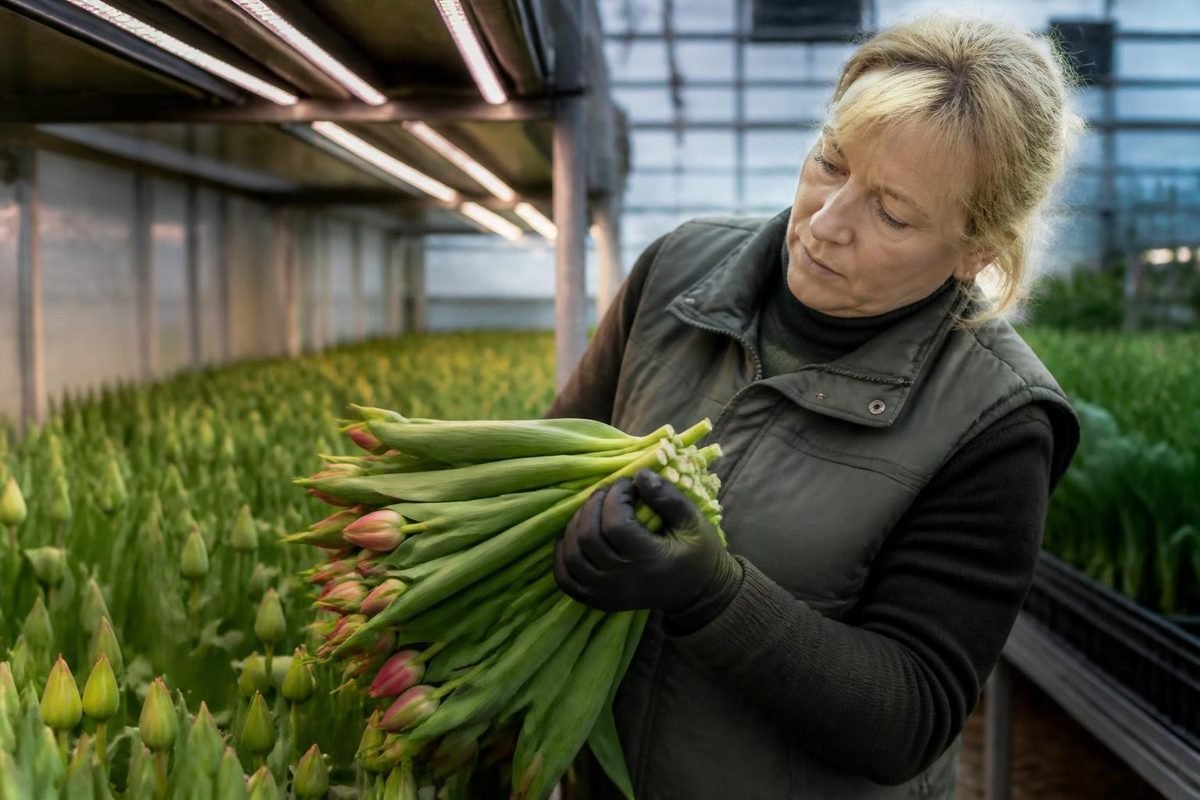
Swedish growers protect cut flowers from short winter days by growing suitable crops under cover and, when needed, providing artificial light. They also manage temperature, moisture and harvest timing to help stems grow well and last after cutting.
Giving plants enough light
In winter, daylight in Sweden is brief, and its length varies across the country. Less light means plants have less energy for growth, so stems may develop more slowly. A greenhouse lets growers make use of the available daylight while protecting plants from outdoor cold.
Some growers use supplemental lamps to give plants more light. LEDs are one option because they can provide light while using less electricity than some older types of horticultural lighting. The amount and timing depend on the crop and the light already reaching it.
Light can also affect flowering itself. Some plants respond to the length of the day or night, so a grower may use lighting to influence when they bloom. That response is different from simply giving a plant more energy to grow.
Keeping the growing space steady
Flowers need a suitable temperature as well as light. Heating can protect crops from freezing and support growth, but more heat is not always better. If a plant grows quickly without enough light, it can produce weak growth. Growers balance warmth with the light available and the needs of each crop.
Greenhouse coverings and insulating screens can help reduce heat loss. Screens need careful use, though, because anything that blocks heat loss may also reduce the daylight reaching plants. The aim is to protect warmth without unnecessarily shading the crop.
Managing moisture around stems
A closed, heated greenhouse can trap moisture. When humidity stays high or water sits on leaves and flowers, fungal diseases can spread more easily. Growers watch conditions and use ventilation when needed, even in cold weather.
Air movement and appropriate spacing help foliage dry. Watering at a time that allows plants to dry before a cool night can also reduce the time leaves remain wet. These steps matter because a healthy stem in the greenhouse has a better chance of reaching the vase in good condition.
Choosing crops and caring for cut stems
Not every flower needs the same conditions. Growers can select crops and varieties suited to cooler temperatures or lower light, and schedule others for brighter months. Bulbs such as tulips can also be grown under controlled conditions for winter cutting, using energy stored in the bulb.
After harvest, clean tools and containers help limit contamination. Many cut flowers benefit from cool storage, which slows ageing and water loss. The right temperature varies by flower, since some species are sensitive to cold.
Questions about winter flowers
Can flowers grow with only winter daylight?
Some can, but growth may be slow. The result depends on the species, location and conditions inside the greenhouse.
Do lamps replace all daylight?
Not necessarily. Supplemental lighting can add to daylight rather than replace it.
Are all cut flowers stored at the same temperature?
No. Growers choose storage conditions with the flower in mind, especially for species that can be damaged by cold.
A useful next read: read more